Blog

Sanskrit, Yoga

The Influence of Samskaras

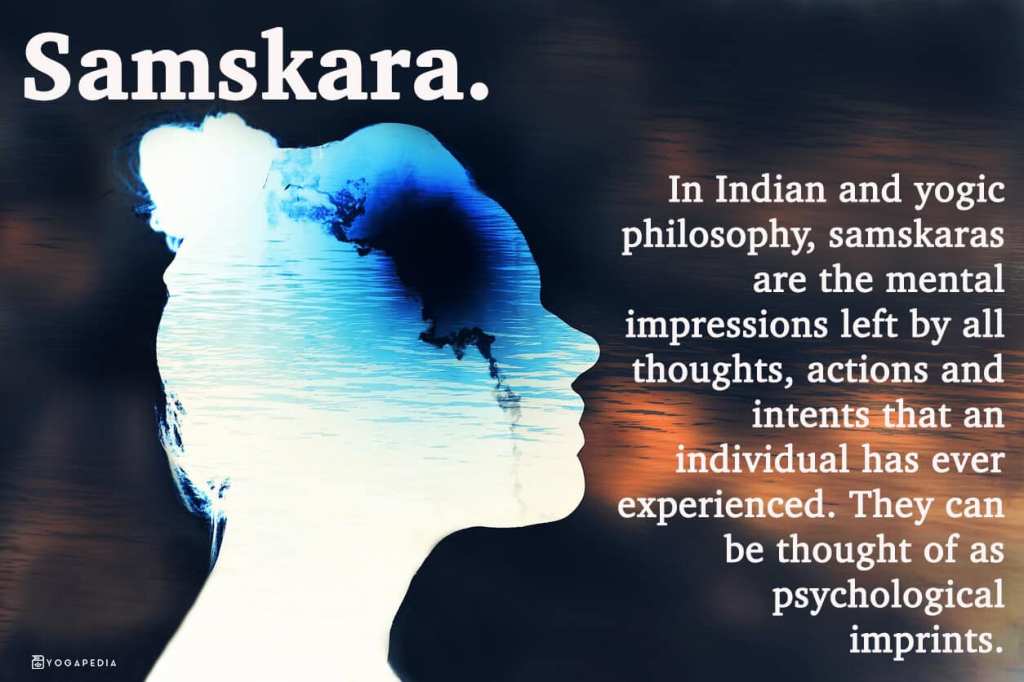
The concept of samskara (a Sanskrit word) is important in Yoga because all the practices of Yoga are designed to train the mind, to clean the mind, to enable us to experience our truest, deepest Self. Samskaras are often visualized as grooves or ruts in the mind caused by habitual thoughts, speech, and actions. The more we repeat specific thoughts, words, and actions, the more deeply they become imbedded in the psyche — and the more difficult they are to change. All of this reminds me of a quote often attributed to the Buddha or to Lao Tzu (and repeated by luminaries such as Mahatma Gandhi and Ralph Waldo Emerson):

“Watch your thoughts; they become words.
Watch your words; they become actions.
Watch your actions; they become habits.
Watch your habits; they become character.
Watch your character; it becomes your destiny.”

How does Yoga help change this sequence? Yoga teaches us to become fully, calmly observant of the present moment — each and every moment, one after the other. In this way, we become the Witness of our own thoughts, emotions, speech, and actions, thereby beginning to see that we are something More than all of these. We begin to notice we always have a choice about the kinds of thoughts, etc. we cultivate. When unhelpful or unhealthy samskaras come to the surface of the conscious mind (after continuing to exist for some time in the unconscious or subconscious mind), we learn to watch and breathe through them as we practice responding in new ways rather than rolling along through the old familiar ruts. Yes, this takes a lot of practice! This is also an example of the many ways Yoga can revolutionize our daily lives from the inside out.

Vibrant Health

Holistic Health

Here’s inspiration from Sri Swami Satchidananda on what it means to be whole, to foster holistic health. I love his metaphor!


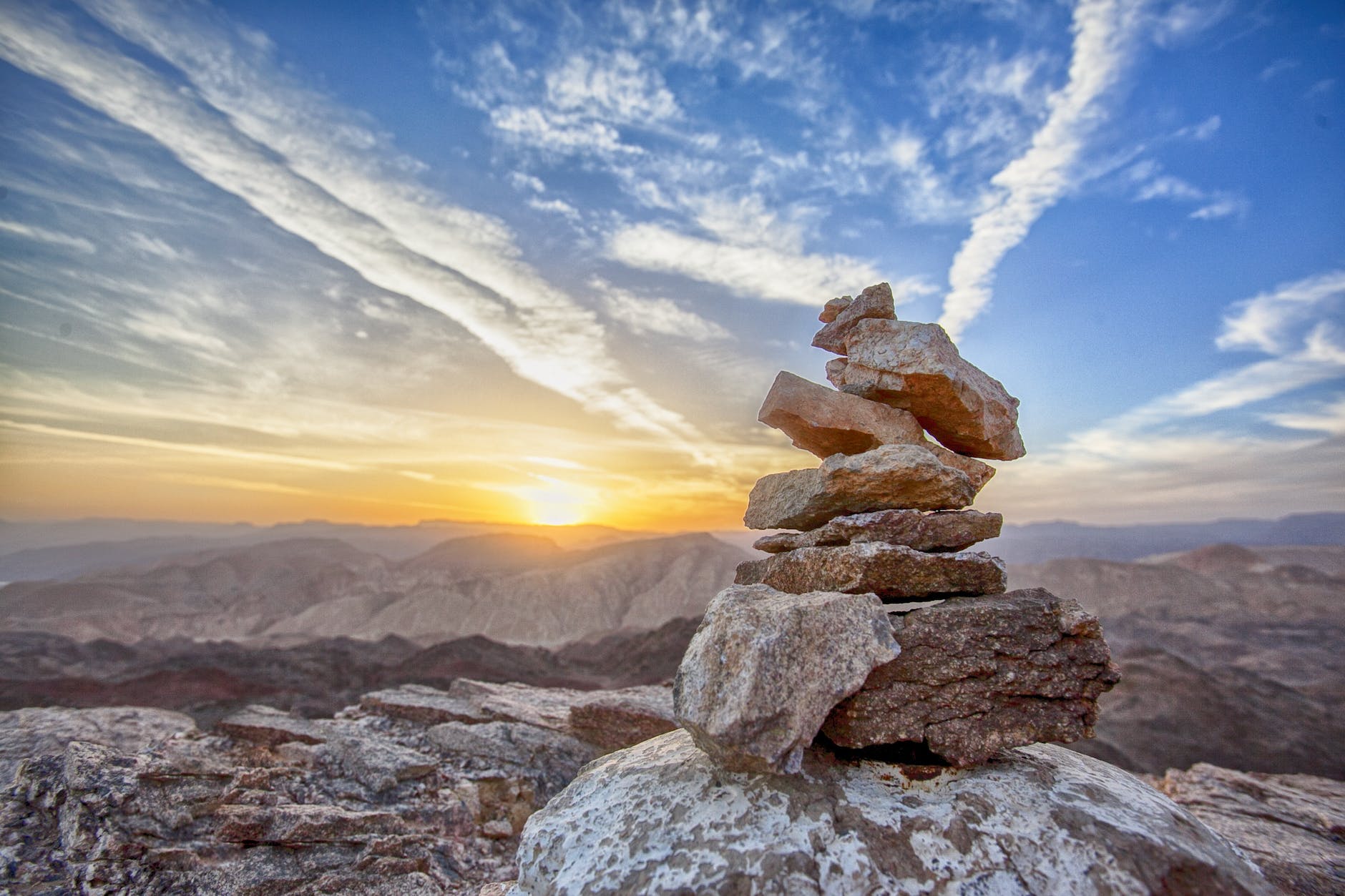
Each person is a mixture of so many things: there is a physical side, a vital side, a mental, moral, intellectual and ultimately, a spiritual side. If we really want to lead a better life, a divine life, we should develop all these different aspects within ourselves. It is something like a motorcar: it should be perfect from the motor to the muffler. Everything in the car—the engine, radiator, battery, tires, brakes—all must be in perfect condition. Last but not least, the spirit (what you call the petrol or gas) must be of good quality too.

Which part(s) of you are asking for special attention from you at this time?

Photo by Pixabay on Pexels.com
Vibrant Health, Yoga

The Power of Relaxation

I was recently reading excerpts from the book, Hatha Yoga, written by Swami Sivananda and originally published in 1939. He has a wonderful section on why relaxation is important. In my yoga classes, I like to remind students that while it’s important for the body to know how to work hard, it’s also important for the body to know how to relax. Normally, we think of relaxation as sleep. Some people think of it as laziness. But true relaxation is neither of these. Here’s what Master Sivananda has to say:

“Life has become very complex in these days. The struggle for existence is very acute and keen. There is very keen competition in every walk of life….

If you practice relaxation, no energy will be wasted. You will be very active, and energetic. During relaxation the muscles and nerves are at rest. The Prana or energy is stored up and conserved. The vast majority of persons who have no comprehensive understanding of this beautiful science of relaxation simply waste their energy by creating unnecessary movements of muscles and by putting the muscles and nerves under great strain….

Do not mistake laziness for relaxation. The lazy man is inactive. He has no inclination to work. He is full of lethargy and inertia. He is dull. Whereas a man who practices relaxation takes only rest. He has vigor, strength, vitality and endurance. He never allows even a small amount of energy to trickle away. He accomplishes wonderful work gracefully in a minimum space of time….

The science of relaxation is an exact science. It can be learnt very easily. Relaxation of muscles is as much important as contraction of muscles. I lay great emphasis on the relaxation of mind, nerves and muscles. For relaxation Savasana is Prescribed.”

——————————————————————————–

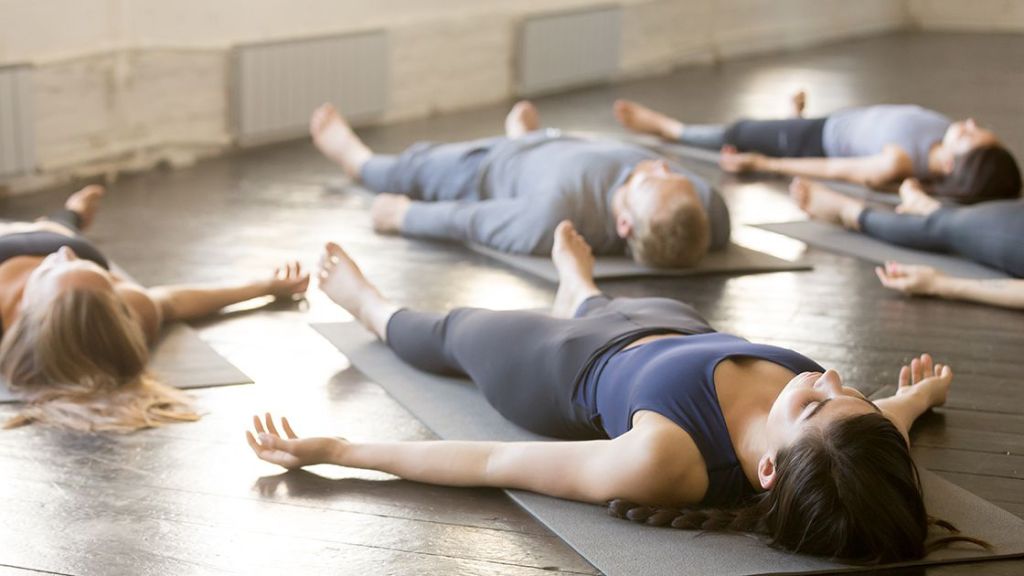
And savasana, of course, is the “final relaxation” pose of yoga. This pose is practiced after all of the more active asanas have been completed. This pose is often only practiced for three minutes, but the full benefit is experienced when the practitioner remains in the pose for 5-30 minutes. Feel free to meditate on the breath or use a recording of yoga nidra during this time. And yes, this pose can be practiced all by itself!

Be well! OM shanti… peace, peace, peace….

photo from SHAPE magazine
Vibrant Health, Yoga

How Yoga Helps Insomnia

Did you know the mental self-mastery of Yoga can help you manage insomnia? Here are some useful points from Nina Zolotow with Yoga for Healthy Aging:

“The first problem is what happens to your sleep when your stress response is triggered when you’re not actually in danger. Your reptilian brain, which triggers your stress response, is very primitive. And it has no way to tell the difference between something that IS dangerous and something that FEELS dangerous. So your stress response can be triggered when:

1. You’re worrying about the future. You’re not in actual danger, but your fantasies about dangerous or scary things that might happen can trigger your stress response. So then you’re losing sleep over something that not only isn’t happening now but is something that might not ever happen.

2. You’re remembering or reliving bad experiences from the past. Again, you’re not in actual danger at the moment, but your memories of frightening or infuriating experiences can trigger your stress response. So you’re losing sleep over things that have already happened and there is nothing you can do about in the middle of the night.

3. You’re thinking about something unpleasant or upsetting that isn’t personally dangerous. It could be something upsetting happening in another part of the world, such as a war or a famine, that concerns you but isn’t putting you in actual danger. It could one of life’s daily challenges that cause strong emotions for you but don’t actually put you at risk for death or injury, such as having a work deadline or needing to do your taxes. And it could even be something fictional, such as a suspenseful, violent, or disturbing TV show or book, that you watched or read just before bed.”

So, how do you short-circuit these thoughts? You can use the Yoga technique of slow, deep breathing – focusing all your attention on the movement of the breath. Be sure to get a good, complete exhalation each time. Or – perform a slow body scan, moving your awareness from your toes up to the top of your head, and back down again. In these ways, you teach your brain there is no danger at this moment, so it’s okay to relax and slip into sleep. All is well. Peace, peace, peace….

Photo by Kate Stone Matheson on Unsplash
Poetry, Spirituality

As Above, So Below

Mother Nature speaks in green
always, then more gold and red
in autumn. Weeping willows may
be her hair and rivers
her arteries. Her many children,
birds and fish and beasts,
frolic in woods, on beaches, even
in city cemeteries. They speak
and dance and nurture their young.
Do I notice, do I listen? Or, am I
too busy trying to earn money
to pay for my own survival?

Heaven says give up all worries,
listen to the heart more
than the head to find Truth
and Beauty and unending Love.
Prayer does not require words.
Prayer is presence to the Presence
that never vanishes, that lives above
and below, inside and outside. See?
Nature and the Divine are one, like
two sides of a coin, like the clam’s
bivalve shell resting at water’s edge:
as above, so below.

Approach the Divine through the objects
of Nature. And find deep connection
and love of Nature by listening
to Heaven. Pray with the breath,
the heartbeat. Pray with holy texts
or with crayons. Pray by dancing
or singing. Or. Sit. In silence. Listen:
“Be still and know that I am God.”*
Where are you, God?
“As above, so below. Be.” Amen. OM… OM… OM…

*Psalm 46:10

Jivani at the Pagoda in Norfolk, VA