Vibrant Health, Yoga

Styles of Hatha Yoga

Nowadays there are many varieties of group yoga classes offered in recreation centers, yoga studios, gyms, and other locations. The word “hatha” is often used to refer to these physical classes in a general way. “Hatha” is a Sanskrit word that literally means sun-moon. The practice is designed to engage the body in a balanced way using opposites (sun-moon) such as right/left, up/down, forward/backward to help maintain physical health and well-being.

Prospective yoga students often feel stumped about the wide variety of names used for group classes. How to decide on a class that would be most appropriate for one’s needs? Here is a useful guide I designed for my university students:

Gentle classes may be called Intro to Yoga, Beginners, Gentle, Hatha, Chair Yoga or (the most gentle) Restorative Yoga.

— A focus on deep stretching is called Yin Yoga (based on Taoist Chinese practices).

Moderate intensity classes may be called Hatha or Slow Flow Yoga.

Intense classes may be called Flow, Power, Vinyasa or Ashtanga Yoga.

I recommend a variety of styles depending on what you need each time you practice. For example, sometimes you need to be challenged, and sometimes you need to take it easy and de-stress. Private sessions can be a wonderful way to get exactly what you need each time you meet with your teacher.

Please use my Contact Page to ask questions or share your concerns. Namaste….

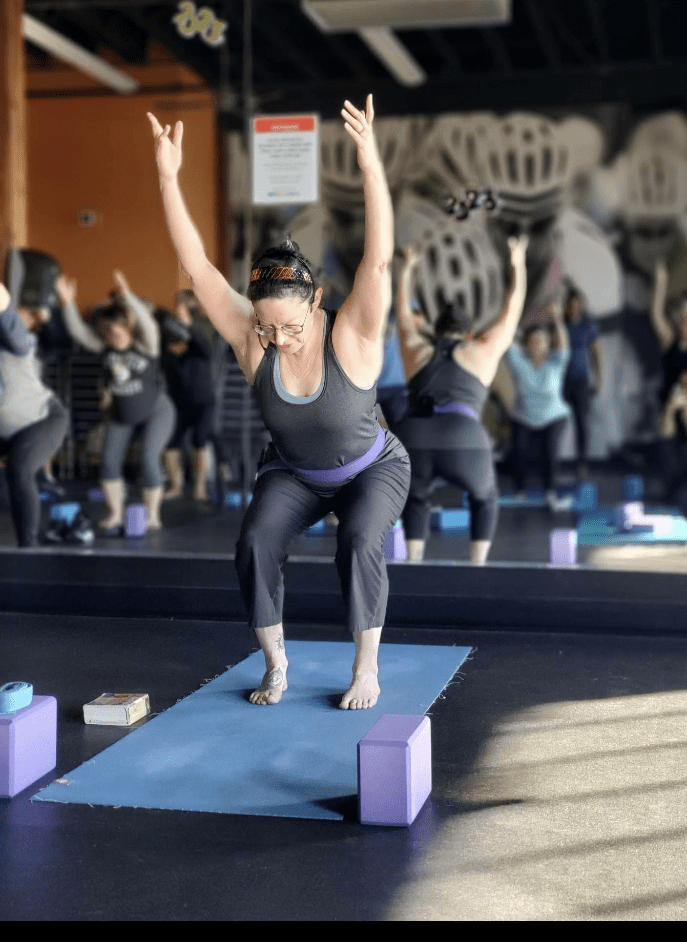
My Slow Flow Yoga class at Onelife Fitness, Norfolk

Spirituality, Yoga

Sadhana: The 6 Branches of Integral Yoga

Join my In-Person 18-hour training — Sadhana: The 6 Branches of Integral Yoga (July 22-23, 2023), Hampton, Virginia. Register by July 10th to enjoy the early bird discount.

Register here: https://clients.mindbodyonline.com/asp/main_enroll.asp?fl=true&tabID=8

In this weekend session (Saturday and Sunday, 9:00AM-6:00PM), we will dive deeply into the six branches of Integral Yoga (karma, bhakti, jnana, raja, hatha, japa), learning how to utilize them in our own lives as yogis and yoga teachers. When we have a solid personal practice, we present ourselves as whole and authentic in the world. This course will include presentations, discussions, journaling exercises, and physical (hatha) practice including meditation. The session is open to yoga teachers (for continuing education credit) and anyone who is interested in the subject matter. Join us!

Spirituality, Yoga

Keeping Spiritual Vows

“When you make a vow or a decision, don’t expect it to go smoothly. If everything goes smoothly, where is the test to prove that you will stick to that vow? You should even be concerned if no tests come. If you vow not to eat sweets, soon someone will offer you the most tempting treat. If you vow to wake up every morning at 4:30 for meditation, suddenly you’ll feel so tired. If you vow to treat your spouse as divine, probably at first he or she will look and act like a god. Then all of a sudden, that same god will turn into something terrible! Don’t waver in your vow, continue to think of him or her as divine. If you pass the test, the situation has become a great instrument for your spiritual growth.”

~Sri Swami Satchidananda

Photo by Markus Spiske on Pexels.com
Spirituality, Yoga

Spiritual Yoga

Resharing this 2011 post from my blog, Soaring with God:

Yoga class is a spiritual (even religious) experience for me, even when I’m working as the teacher.  I take it seriously and put my entire heart and soul into it.

For me, the class begins 15-30 minutes before the actual start time – when I enter the room and prepare it for class.  I like the room to be a certain way:  Everything neat and clean; mats and props stored in their proper places; lights on a dim setting; calming music playing in the background.  Creating this kind of “yoga atmosphere” provides a pleasant space for my students to enter and prepare themselves for class.

The door to the room is kept open until the class begins.  For me, the act of closing the door is a spiritual experience.  It symbolizes the creation of a sacred space where people feel held, accepted, loved – where the heart, mind and soul can expand without interference.

I choose music to inspire without distracting the mind.  I use a short meditation (usually a quote from a spiritual master) which is read to the class at the beginning and again in the middle of class.  These are intended to help students connect with themselves (and others) on all levels – including the mental and spiritual realms.

As I teach, I have a sense that I’m accessing a universal creativity that comes from God.  It’s delicate, subtle and precious.  I am filled with awe.

I connect to the peace, love and joy of God and then try to share that with my students.  It’s much more than a physical workout.  In fact, for me, the physical part is secondary to everything else that’s going on in the class – within myself and within my students.

Toward the end of class, as students are lying in final relaxation, I often find myself spontaneously moved into prayer for them as individual souls.  Within my heart, I pray for them and for the world.

We conclude class with a sense of wholeness (I even venture to call it holiness) – and a spoken prayer that as we go out into the rest of our daily lives, we may live our lives from our peaceful, loving, joyful center.  For me, that center is God, always with us.

Photo by Becky Stephens, Onelife Fitness, Norfolk
Spirituality, Yoga

Yoga and Christianity

For about twelve years, I’ve been enjoying the Daily Meditations offered by the Franciscan priest, Richard Rohr, and the Center for Action and Contemplation. This week, the theme for the meditations is “The Way of Jesus.” As I read today’s message, I found myself reflecting on its similarity to the teachings of Yoga….

Here’s a quote:

I believe that we rather totally missed Jesus’ major point when we made a religion out of him instead of realizing he was giving us a message of simple humanity, vulnerability, and nonviolence that was necessary for the reform of all religions—and for the survival of humanity….

“Jesus is a person and, at the same time, a process. Jesus is the Son of God, but at the same time he is ‘the Way.’ Jesus is the goal, but he’s also the means, and the means is always the way of the cross.”

There’s so much here that meshes with the ancient teachings and practices of Yoga. For example, Yoga is built upon the foundation of simplicity, nonviolence, and compassion. We need these practices more than ever if humanity expects to survive – and if we hope to save this planet from exploitation and destruction.

And, as Jesus is described as both the goal and the means to the goal, Yoga (which ultimately means union with God), is both the goal and the means to that goal. The “way of the cross” refers to the ability to hold all the opposites of life in balance: The vertical and the horizontal aspects of life must be joined. For example, the ways of spirit and the ways of community/fellowship must be united.

I love how the deeper spiritual teachings from every religion always offer the same lessons for humanity. In this case, there’s agreement between Yoga and Christianity. These teachings have survived for thousands of years because they still offer useful information and practices. I pray that we learn the value of these teachings rather than always assuming that modern guidelines are somehow more relevant for our times. On the contrary, certain lessons are timeless and can be trusted.

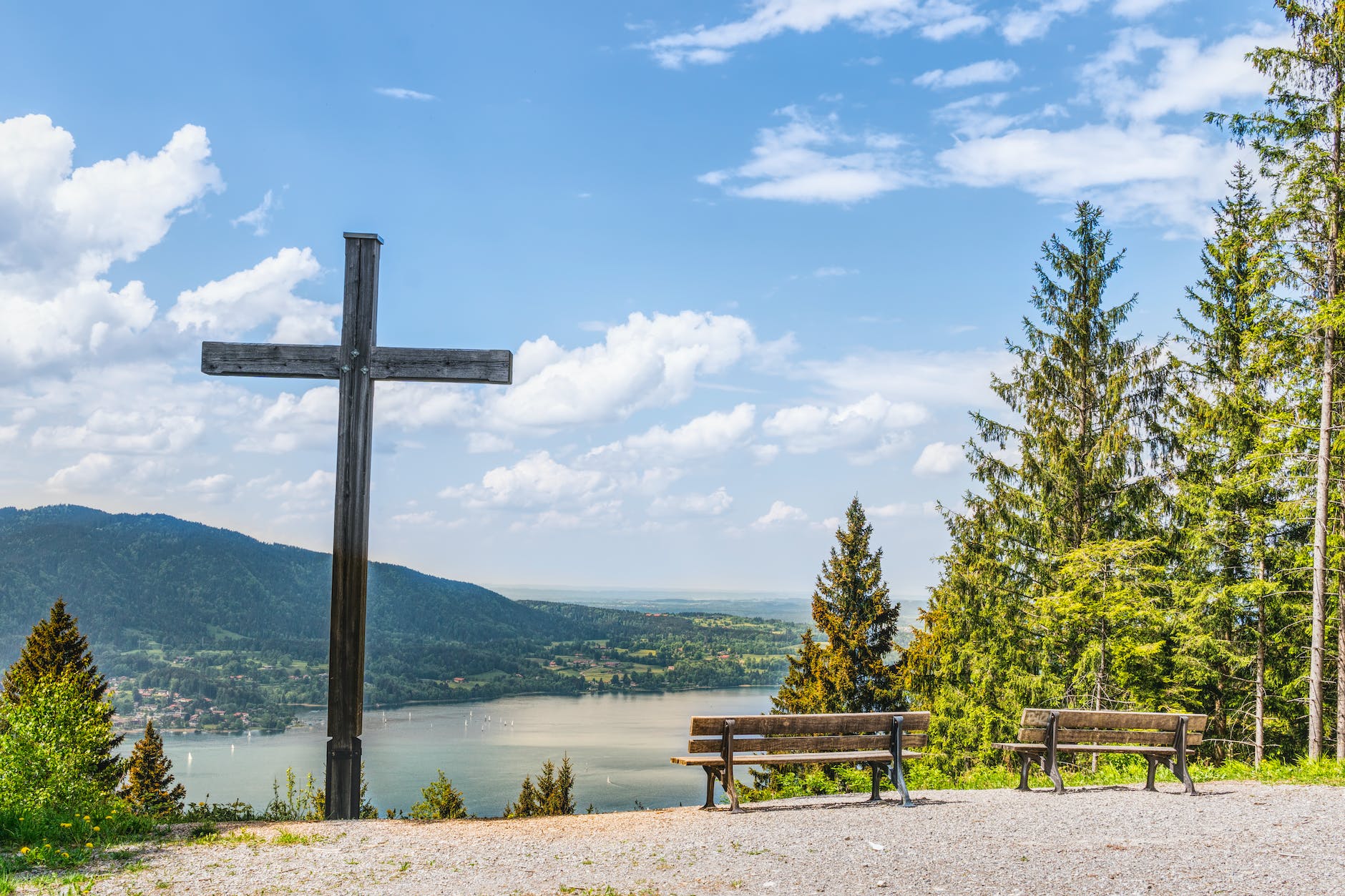
Photo by Felix Mittermeier on Pexels.com